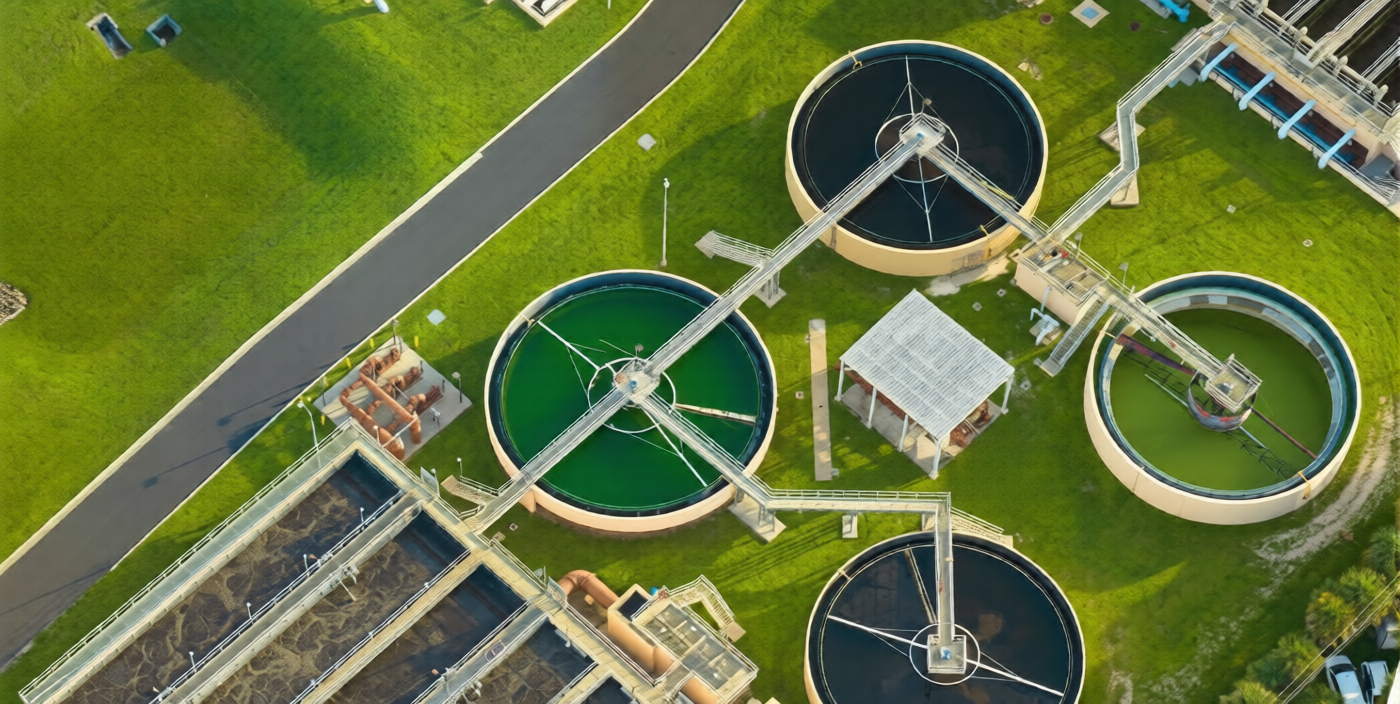
Effective wastewater management is essential for protecting natural water resources, maintaining environmental compliance, and supporting sustainable urban and industrial development. Wastewater generated from domestic and industrial activities must be treated before discharge or reuse to reduce pollutants and prevent contamination of water bodies.
Two commonly used wastewater treatment systems are Sewage Treatment Plants (STPs) and Effluent Treatment Plants (ETPs). Although both systems are designed to treat wastewater, they are used for different types of wastewater and follow different treatment approaches depending on the contaminants present.
Understanding STP vs ETP helps municipalities, industries, and facility operators select the appropriate treatment system for efficient wastewater management.
What Is a Sewage Treatment Plant (STP)?
A Sewage Treatment Plant (STP) is designed to treat domestic wastewater, commonly referred to as sewage. This type of wastewater is generated from residential, commercial, and institutional sources.
Typical sources of domestic sewage include:
- Residential buildings and housing complexes
- Commercial establishments such as offices and hotels
- Hospitals and educational institutions
- Municipal sewage collection systems
Domestic wastewater mainly contains organic matter, suspended solids, nutrients, and microorganisms. The objective of an STP is to remove these contaminants and produce treated water that can be safely discharged or reused for non-potable applications.
Typical Treatment Stages in an STP
Sewage treatment plants generally operate through several treatment stages to remove pollutants and improve water quality. To better understand how sewage treatment plants work step by step, it is useful to review the complete treatment process used in a typical STP system.
1. Preliminary Treatment
In the preliminary stage, large debris such as plastics, rags, and grit are removed using screening systems and grit chambers. This step protects downstream equipment from clogging and damage.
2. Primary Treatment
During primary treatment, wastewater flows into sedimentation tanks where heavier suspended solids settle at the bottom as sludge, while lighter materials float to the surface for removal.
3. Secondary Treatment
Secondary treatment involves biological processes in which microorganisms break down organic pollutants present in wastewater. Aeration systems supply oxygen to support microbial activity in aeration tanks.
4. Tertiary Treatment
In some treatment plants, tertiary treatment is used to further improve water quality. This stage may include filtration, nutrient removal, and disinfection before the treated water is discharged or reused.
What Is an Effluent Treatment Plant (ETP)?
An Effluent Treatment Plant (ETP) is designed to treat industrial wastewater, commonly known as effluent. Industrial effluent may contain a wide range of contaminants depending on the manufacturing process.
Common pollutants present in industrial effluent include:
- Chemicals and solvents
- Dyes and pigments
- Oils and grease
- Heavy metals
- Acids and alkaline substances
Because industrial wastewater varies significantly between industries, ETP systems are usually designed according to the specific characteristics of the effluent being treated.
Industries That Use ETP Systems
Effluent treatment plants are commonly used in industries such as:
- Pharmaceutical manufacturing
- Textile and dyeing units
- Chemical processing plants
- Food and beverage production facilities
- Metal finishing and electroplating industries
These systems help industries reduce pollutant discharge and comply with environmental regulations.
Treatment Processes Used in ETP Systems
Effluent treatment plants typically combine multiple treatment processes to remove both organic and chemical contaminants.
1. Physical Treatment
Physical processes such as screening, sedimentation, and oil separation remove large particles, suspended solids, and floating materials.
2. Chemical Treatment
Chemical treatment methods such as coagulation, flocculation, and neutralization are used to remove dissolved contaminants and adjust pH levels.
3. Biological Treatment
Biological processes utilize microorganisms to degrade biodegradable organic pollutants present in industrial wastewater.
4. Advanced or Tertiary Treatment
Additional treatment methods such as filtration, adsorption, and disinfection may be applied to further improve effluent quality before discharge.
STP vs ETP: Key Differences
When comparing STP vs ETP, the primary difference lies in the type of wastewater treated and the treatment technologies used. While STPs are mainly designed for domestic sewage, ETPs are developed to treat industrial effluents that may contain chemical pollutants.
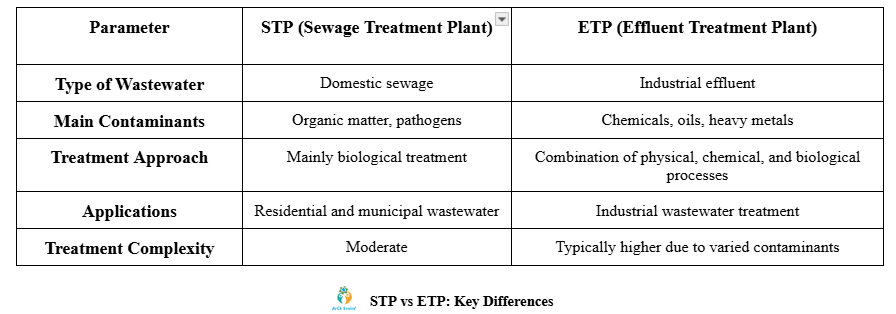
Because industrial effluent may contain hazardous or non-biodegradable substances, ETP systems are often more complex in design and operation.
Equipment Used in Wastewater Treatment Systems
Both STP and ETP systems rely on specialized equipment to ensure efficient wastewater treatment operations.
Common equipment used in wastewater treatment plants includes:
- Screening systems for removing large solids
- Aeration systems used in biological treatment processes
- Sedimentation or clarification units for solid-liquid separation
- Sludge handling and dewatering equipment for managing treatment residues
The selection and configuration of equipment depend on factors such as flow rate, wastewater characteristics, and treatment objectives.
Applications of STP and ETP Systems
STP and ETP systems are used in different sectors depending on the type of wastewater generated.
Common Applications of STP
- Residential housing complexes
- Commercial buildings and hotels
- Hospitals and institutional facilities
Municipal sewage treatment infrastructure.
Common Applications of ETP
- Pharmaceutical manufacturing plants
- Textile processing units
- Chemical production facilities
- Food and beverage industries
Selecting the correct treatment system depends on the source and composition of wastewater.
Importance of Wastewater Treatment
Wastewater treatment plays a critical role in protecting the environment and conserving water resources. Proper treatment of wastewater provides several important benefits.
- Reduction of pollutants discharged into natural water bodies
- Protection of public health and ecosystems
- Compliance with environmental regulations
- Opportunities for water recycling and reuse
As water resources become increasingly limited, efficient wastewater treatment systems are becoming essential for sustainable water management.
Conclusion
Understanding STP vs ETP is important for selecting the appropriate wastewater treatment solution. Sewage Treatment Plants (STPs) are primarily designed to treat domestic sewage using biological treatment processes, while Effluent Treatment Plants (ETPs) are used to treat industrial wastewater containing chemical and complex pollutants.
Both systems play a vital role in reducing environmental pollution and supporting sustainable water management. Proper design, operation, and maintenance of wastewater treatment facilities help industries and municipalities meet regulatory requirements while protecting natural water resources.
Frequently Asked Questions
1. What is the main difference between STP and ETP?
The main difference between STP and ETP lies in the type of wastewater treated. STPs treat domestic sewage generated from residential and commercial sources, while ETPs treat industrial wastewater containing chemicals and other contaminants.
2. Can STP treat industrial wastewater?
Sewage Treatment Plants are generally designed for domestic wastewater and may not effectively treat complex industrial effluents without additional treatment processes.
3. Why are ETP plants required in industries?
Effluent Treatment Plants help industries remove chemical pollutants from wastewater and comply with environmental discharge regulations.